
The Morning I Made a Stack
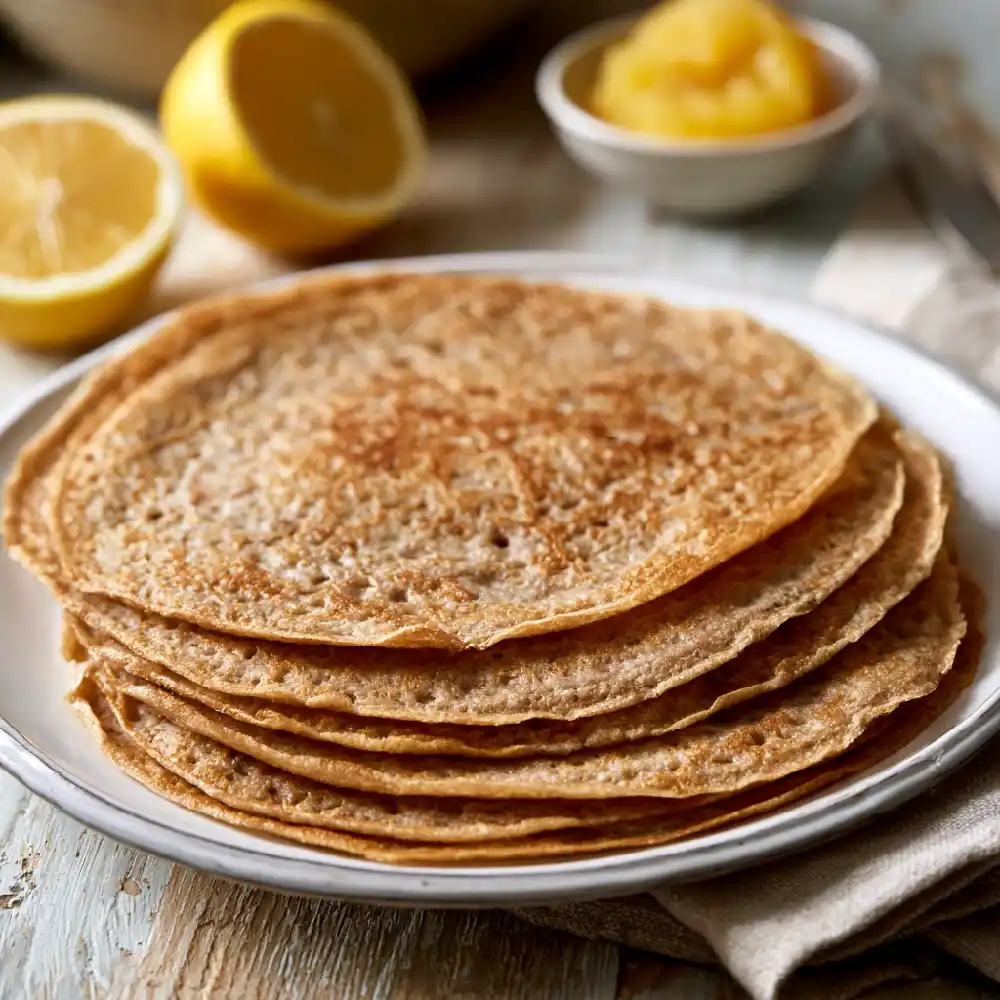
I made these crêpes on a slow morning when the lemons in the fruit bowl smelled too good to leave alone. Their zest warmed in the pan as each thin round turned lightly golden. We ate the first few folded with a squeeze of lemon.

Why I Love This Batter
Buckwheat gives these crêpes a gentle, nutty flavor that pairs beautifully with citrus. The batter rests before cooking, so the thin rounds are easier to swirl and fold. I serve them sweet for brunch, though they are lovely as a light dessert too.
What Goes Into the Batter
- 1 cup buckwheat flour
- 1 tablespoon granulated sugar
- 1/4 teaspoon fine salt
- 2 large eggs
- 1 1/2 cups milk
- 1/4 cup water
- 2 tablespoons unsalted butter, melted
- 1 tablespoon finely grated lemon zest
- 1/2 teaspoon vanilla extract
- 2 tablespoons fresh lemon juice
Swirl, Flip, Fold
- Whisk the buckwheat flour, sugar, and salt.
- Whisk in the eggs.
- Gradually whisk in the milk and water.
- Whisk in the melted butter, zest, and vanilla.
- Cover and rest the batter for 30 minutes.
- Heat a lightly greased 8-inch skillet over medium heat.
- Pour in about 1/4 cup batter.
- Swirl the pan to make a thin round.
- Cook for 60 to 90 seconds, until the edges lift.
- Flip and cook for 20 to 30 seconds.
- Repeat with the remaining batter.
- Fold the crêpes and drizzle with lemon juice.
Little Ways to Fill Them
- Add fresh raspberries.
- Fold around sliced strawberries.
- Spoon on plain Greek yogurt.
- Add a little lemon curd.
- Serve with warm blueberries.
- Sprinkle with powdered sugar.
- Fill with whipped cream.
- Add toasted almond slivers.
- Fold with thin banana slices.
- Serve plain with extra lemon.
- Stack and slice into small wedges.
- Pair with hot tea.
Pro Tips
- Whisk the milk in gradually rather than pouring it all in at once. A smooth batter is easier to spread thinly across the skillet.
- Let the batter rest for the full 30 minutes. It gives the buckwheat flour time to absorb liquid and makes the crêpes less likely to tear.
- Check the batter after resting and stir it gently. If it seems too thick to swirl, add water one tablespoon at a time.
- Use a lightly greased pan rather than a pool of butter. Too much fat can make the batter slide before it spreads into an even round.
- Wait until the edges look dry and lift easily before flipping. Trying to turn a crêpe too soon is the quickest way to tear it.
- Keep finished crêpes under a clean towel while cooking the rest. They stay soft and warm enough to fold around your chosen filling.
FAQs
Is buckwheat flour gluten-free?
Buckwheat is not wheat, despite its name. If you need to avoid gluten strictly, choose buckwheat flour labeled gluten-free and check any other packaged ingredients for your needs. Clean equipment and a suitable filling matter too.
Can I make the batter ahead of time?
Yes, cover and refrigerate it overnight. Stir it well before cooking, since the flour can settle and thicken as it rests. Add a little water if needed until the batter flows easily around the pan.
Why are my crêpes tearing?
The batter may be too thick, the pan may be too cool, or you may be flipping too early. Aim for a thin layer and wait until the edges release easily. The first crêpe is often a chance to adjust the heat and batter.
Can I make these dairy-free?
You can try unsweetened dairy-free milk and a neutral oil in place of the milk and butter. Their flavor and browning may differ from this version. For someone with a dairy allergy, check all ingredient labels and toppings as well.
How should I store leftovers?
Stack cooled crêpes with parchment between them and refrigerate in a covered container for up to 2 days. Warm them briefly in a skillet before filling. Store juicy fruit and lemon curd separately so the crêpes do not become soggy.
Buckwheat Lemon Crêpes
Ingredients
Equipment
Method
- In a large mixing bowl, whisk together the buckwheat flour, granulated sugar, and fine salt until evenly combined.
- Whisk in the eggs until the mixture begins to form a smooth, thick batter.
- Gradually whisk in the milk, followed by the water, adding the liquid in stages to help prevent lumps and create a smooth, pourable batter.
- Whisk in the melted butter, finely grated lemon zest, and vanilla extract until fully incorporated.
- Cover the bowl and let the batter rest for 30 minutes at room temperature. After resting, stir gently. If it seems too thick to swirl easily, add water one tablespoon at a time until it flows readily.
- Heat an 8-inch skillet over medium heat and lightly grease the surface with butter or neutral oil. The pan should be hot enough for the batter to set without browning too quickly.
- Pour about 1/4 cup of batter into the skillet. Immediately lift and swirl the pan so the batter spreads into a thin, even round.
- Cook for 60–90 seconds, until the surface looks set and the edges begin to lift easily from the pan.
- Carefully flip the crêpe with a thin spatula and cook the second side for another 20–30 seconds, until lightly golden. Transfer to a plate and cover loosely with a clean towel to keep warm.
- Repeat with the remaining batter, lightly greasing the skillet as needed. Stack the finished crêpes under the towel to keep them soft and pliable.
- Fold the warm crêpes into quarters or roll them around your preferred filling. Drizzle with fresh lemon juice and serve with berries, yogurt, powdered sugar, or lemon curd if desired.
Notes
One More Fold for Me
I love how a thin crêpe can feel special without being fussy. The buckwheat tastes warm and nutty, and a little lemon wakes it right up. Everyone can choose a different filling, which keeps breakfast pleasantly unhurried. I usually save the last crêpe for another squeeze of lemon and a quiet cup of tea.