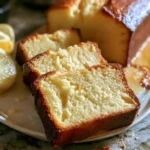
A Slice That Holds Together
I made this gluten-free lemon loaf with psyllium husk because I wanted a cake I could cut into generous slices and carry to the table without leaving crumbs behind. It came out tender and bright, with fresh lemon in the batter and a gentle sweetness that suits afternoon tea. The psyllium helps give the loaf structure, but it does not take attention away from the lemon.

This is a simple loaf cake rather than a bread. A blend of rice flour, almond flour, and tapioca flour keeps the crumb soft, while the psyllium husk helps bind everything together. I let the loaf cool completely before cutting it; waiting makes those first neat slices much more satisfying.
What Goes Into the Loaf
Use an 8-by-4-inch loaf pan for this recipe. Measure the flours separately rather than replacing them with an all-purpose gluten-free blend, which may already contain binders.
- 1 tablespoon whole psyllium husk
- 1/2 cup unsweetened milk or dairy-free milk
- 1 cup finely milled white rice flour
- 1/2 cup fine almond flour
- 1/2 cup tapioca flour, also called tapioca starch
- 2 teaspoons gluten-free baking powder
- 1/4 teaspoon fine salt
- 3 large eggs
- 3/4 cup granulated sugar
- 1/3 cup neutral oil
- 1/4 cup fresh lemon juice
- 2 tablespoons finely grated lemon zest
- 1 teaspoon vanilla extract
The amount of psyllium matters. This recipe uses whole psyllium husk, not finely ground psyllium powder. Powder packs more densely into a spoon, so using a full tablespoon of it could make the lemon loaf too dense or gummy.
Mix and Bake the Cake
- Heat the oven to 350°F (175°C). Grease an 8-by-4-inch loaf pan and line it with parchment paper, leaving an overhang on the long sides.
- Stir the whole psyllium husk into the milk in a small bowl. Set it aside for 10 minutes to thicken.
- Whisk the rice flour, almond flour, tapioca flour, baking powder, and salt together in a medium bowl.
- In a large bowl, whisk the eggs and sugar until well combined. Whisk in the oil, lemon juice, lemon zest, and vanilla.
- Add the thickened psyllium mixture to the egg mixture and whisk until it is distributed evenly. It may take a little stirring to break up the gel.
- Add the dry ingredients. Stir until no dry flour remains, then let the batter stand for 5 minutes.
- Scrape the batter into the prepared pan and smooth the top. It will be thicker than some wheat-flour cake batters.
- Bake for 45 to 55 minutes, until the top is golden and a toothpick inserted into the center comes out clean or with a few moist crumbs.
- Cool the loaf in the pan for 15 minutes. Lift it onto a wire rack using the parchment and let it cool completely before slicing.
The short rests are part of making this psyllium husk lemon loaf. The first hydrates the psyllium so it can mix through the batter; the second lets the flours absorb moisture before baking. Neither requires extra work just enough time to clear the counter and put the mixing bowls away.

Ways to Serve a Slice
I usually serve this gluten-free lemon loaf plain, especially when it is freshly cooled. If I am setting it out for brunch or dessert, one small addition makes it feel dressed up.
- Dust the cooled loaf with powdered sugar.
- Add raspberries or blueberries alongside each slice.
- Serve with a spoonful of plain yogurt.
- Spread a thin layer of lemon curd on a slice.
- Pair it with hot tea or coffee.
- Toast a leftover slice lightly and serve it warm.
Powdered sugar is an easy finish, but add it only after the loaf is fully cool. If the cake is still warm, the sugar will quickly disappear into the surface.
Pro Tips for a Tender Loaf
- Check that your psyllium is labeled whole husk. Ground psyllium powder behaves differently by volume; do not swap it in tablespoon for tablespoon.
- Use finely milled white rice flour. A coarse flour can make the cake feel gritty, even when the loaf is fully baked.
- Zest the lemons before juicing them. Grate only the yellow part of the peel to get fragrant lemon flavor without bitterness.
- Whisk the dry ingredients thoroughly. Distributing the psyllium-free flour blend and baking powder evenly helps the loaf rise consistently.
- Avoid adding extra liquid because the batter looks thick. It is meant to thicken further during its brief rest.
- Test the middle of the loaf before taking it out. The top can turn golden before the center has finished baking.
Frequently Asked Questions
What does psyllium husk do in a gluten-free lemon loaf?
It absorbs liquid and helps the crumb hold together without wheat gluten. In this recipe, it makes the cooled cake easier to slice while keeping the texture tender.
Can I use psyllium husk powder instead?
This recipe is measured for whole husk, so I would not use the same volume of powder. Because brands vary in how finely they grind it, whole psyllium husk is the more dependable choice here.
Is the loaf dairy-free?
It can be. Choose an unsweetened dairy-free milk, such as almond or oat milk, and the ingredients listed contain no dairy. Check product labels if you are baking for someone with an allergy.
How can I tell if it is gluten-free?
Use gluten-free-labeled baking powder and check your flours and other packaged ingredients if you need to avoid gluten strictly. For someone with celiac disease, also use clean pans, utensils, and work surfaces to prevent cross-contact.
How should I store leftovers?
Keep the completely cooled loaf in an airtight container at room temperature for up to 2 days or in the refrigerator for up to 5 days. You can freeze individual slices, well wrapped, for up to 2 months. Let a refrigerated slice come to room temperature if you prefer a softer crumb.
Gluten-Free Lemon Loaf with Psyllium Husk
Ingredients
Equipment
Method
- Preheat the oven to 350°F (175°C). Grease an 8-by-4-inch loaf pan and line it with parchment paper, leaving an overhang along the long sides to make the loaf easier to lift out.
- In a small bowl, stir the whole psyllium husk into the milk. Set aside for 10 minutes until the mixture thickens into a gel.
- In a medium bowl, whisk together the white rice flour, almond flour, tapioca flour, gluten-free baking powder, and salt until evenly combined.
- In a large bowl, whisk the eggs and granulated sugar until well combined. Whisk in the neutral oil, fresh lemon juice, lemon zest, and vanilla extract.
- Add the thickened psyllium mixture to the egg mixture. Whisk until evenly distributed, breaking up any clumps of gel as needed.
- Add the dry ingredients to the wet ingredients. Stir until no dry flour remains, then let the batter stand for 5 minutes so the flours can absorb the moisture. The batter will be relatively thick.
- Scrape the batter into the prepared loaf pan and smooth the top with a spatula.
- Bake for 45–55 minutes, until the top is golden and a toothpick inserted into the center comes out clean or with just a few moist crumbs. Check the center carefully, as the top may brown before the loaf is fully baked inside.
- Let the loaf cool in the pan for 15 minutes. Use the parchment overhang to lift it onto a wire rack, then leave it to cool completely before slicing.
- Once completely cool, slice the loaf and serve plain or with a light dusting of powdered sugar, fresh berries, yogurt, or lemon curd. Serve with tea or coffee if desired.
Notes
The Slice I Look Forward To
I like how this loaf feels sturdy enough to share yet soft enough for dessert. The lemon gives every slice a fresh edge, and the psyllium does its quiet work in the background. When I bake it ahead, I know there will be something lovely waiting for the kettle to boil.