A Cheesecake Worth Waiting For
I make this gluten-free lemon cheesecake with a nut crust when I want dessert finished before a gathering begins. The lemon filling is creamy and bright, while the almond-and-pecan base gives each slice a buttery crunch. It needs a long chill, which means there is nothing to do at serving time but cut the cake.
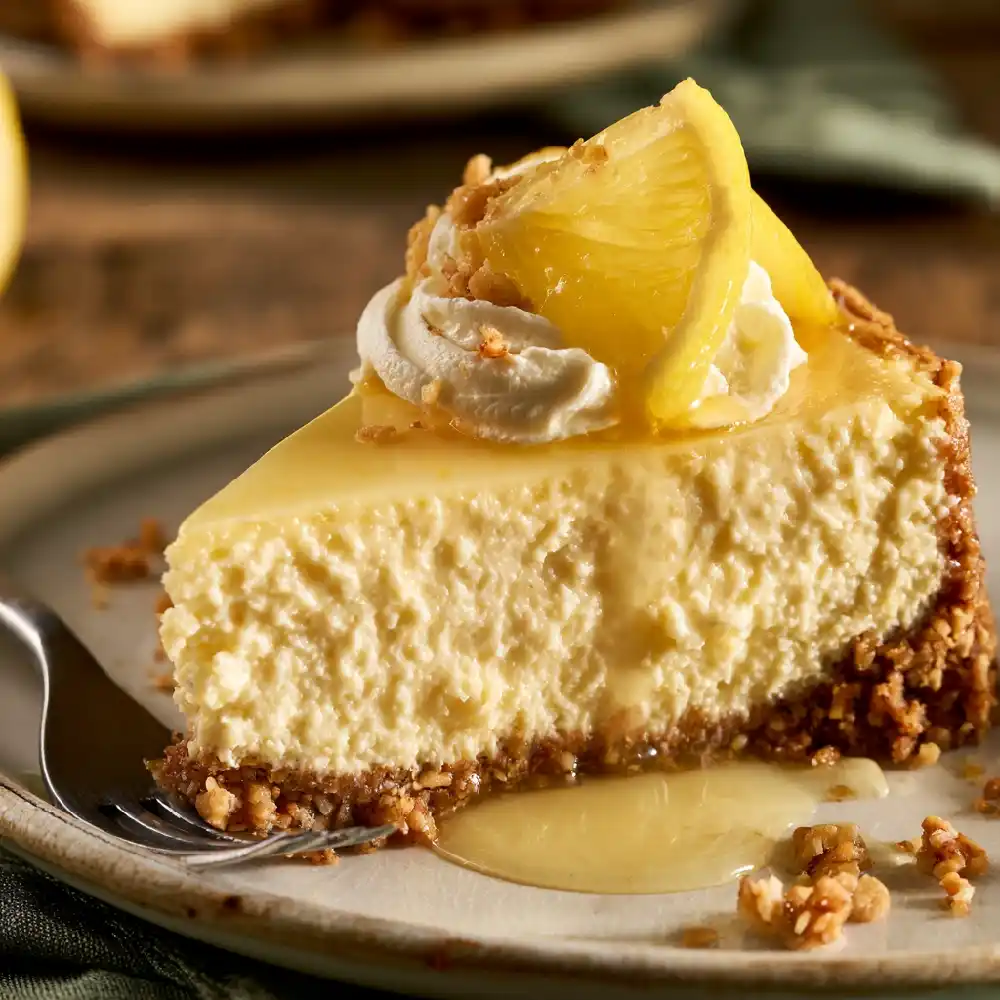
This is a baked cheesecake, not a no-bake filling. Gentle baking and slow cooling help it stay smooth. I do not worry if the top has a small crack; a few berries make it look lovely, and the flavor is what everyone remembers.
What Goes Into the Pan
Use a 9-inch springform pan. Almond flour forms the base of the crust, and finely chopped pecans add texture without making it difficult to slice.
For the nut crust:
- 1 1/2 cups fine almond flour
- 1/2 cup finely chopped pecans
- 2 tablespoons granulated sugar
- 1/4 teaspoon fine salt
- 4 tablespoons unsalted butter, melted
For the lemon cheesecake filling:
- 24 ounces full-fat cream cheese, softened
- 3/4 cup granulated sugar
- 3/4 cup full-fat sour cream, at room temperature
- 3 large eggs, at room temperature
- 1/4 cup fresh lemon juice
- 2 tablespoons finely grated lemon zest
- 1 teaspoon vanilla extract
- Pinch of fine salt
For serving, fresh berries or a little extra lemon zest are optional. The filling has enough lemon flavor to stand on its own, so I usually keep the topping simple.
Bake and Chill the Cheesecake
- Heat the oven to 325°F (165°C). Lightly grease a 9-inch springform pan and line its base with a circle of parchment paper.
- Stir the almond flour, pecans, sugar, and salt together. Add the melted butter and mix until the crumbs are evenly moistened.
- Press the mixture firmly across the bottom of the pan in an even layer. Bake for 10 to 12 minutes, until lightly golden. Set aside while you make the filling.
- Beat the softened cream cheese and sugar on low speed until smooth. Stop to scrape the bowl so no firm cream cheese remains at the bottom.
- Mix in the sour cream. Add the eggs one at a time, mixing on low speed just until each disappears into the batter.
- Mix in the lemon juice, zest, vanilla, and salt. Scrape the bowl once more, then pour the filling over the crust and smooth the top.
- Place a pan of hot water on a lower oven rack. Put the cheesecake on the rack above it and bake for 55 to 70 minutes. The outer portion should look set, while the center still wobbles gently when you nudge the pan.
- Turn off the oven, prop its door open slightly, and leave the cheesecake inside for 1 hour.
- Remove the cheesecake and let it cool completely at room temperature. Cover and refrigerate for at least 6 hours, preferably overnight.
- Run a thin knife around the edge before releasing the springform ring. Slice with a clean knife, wiping the blade between cuts.
The pan of water adds moisture to the oven without putting the springform pan directly in a water bath. It is a straightforward way to encourage gentle baking, though it cannot guarantee a crack-free top.
Little Ways to Serve It
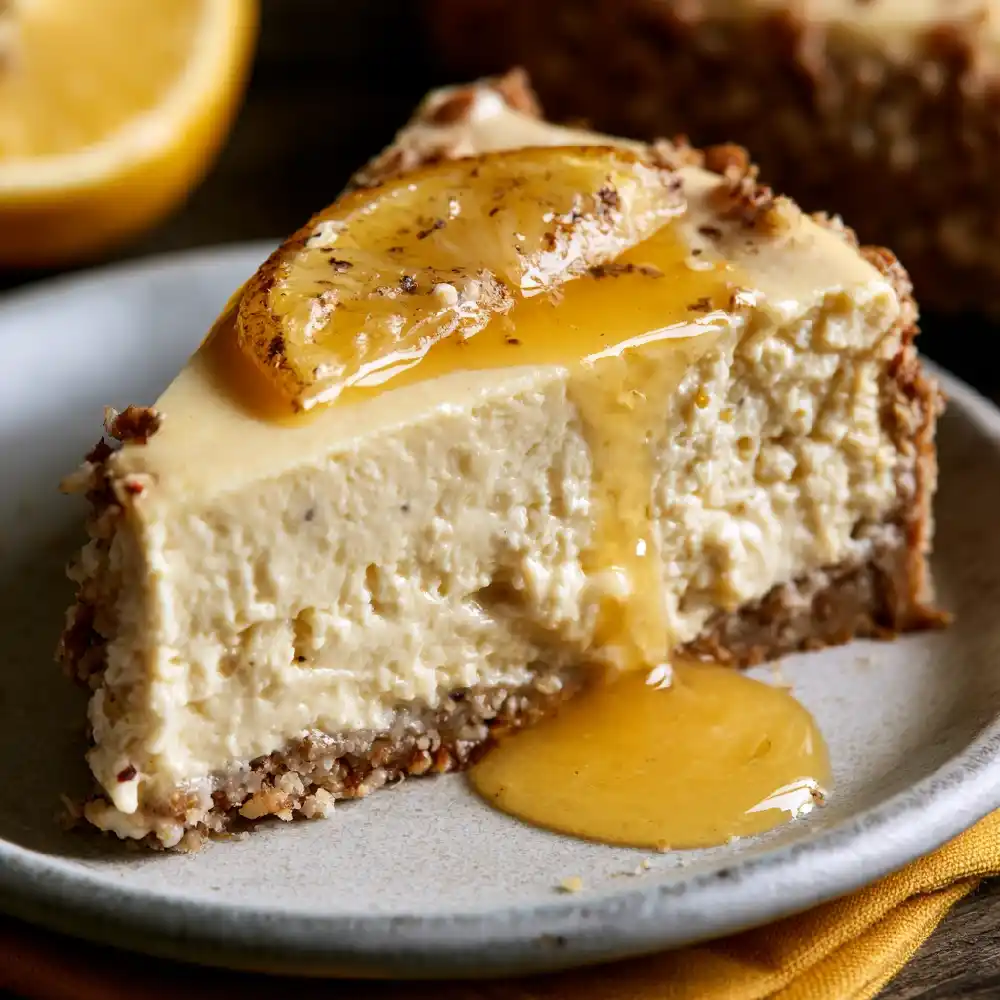
A chilled slice is rich enough that it needs very little alongside it. I set out the cheesecake plain and let people add fruit if they wish.
- Scatter fresh raspberries over each slice.
- Add blueberries and a little lemon zest.
- Serve with sliced strawberries.
- Spoon on a small amount of berry sauce.
- Pair with hot coffee or tea.
- Cut narrow slices for a larger dessert spread.
If I am bringing this gluten-free lemon cheesecake to someone else’s table, I keep the fruit separate until serving. That protects the smooth top during the trip and lets everyone see the nut crust along the edge of each slice.
Pro Tips for a Smooth Filling
- Soften the cream cheese fully before mixing. Cold blocks tend to leave lumps that are difficult to beat out once the other ingredients are in the bowl.
- Bring the sour cream and eggs to room temperature as well. Ingredients at similar temperatures blend more easily.
- Mix on low speed after adding the eggs. Beating in a lot of air can make a cheesecake rise and then sink as it cools.
- Finely chop the pecans. Large pieces can make the almond-and-pecan crust crumble when you cut through it.
- Watch for a gentle wobble in the middle rather than waiting for the whole surface to look firm. The center finishes setting as the cake cools and chills.
- Give the cheesecake its full refrigeration time. A warm cake may taste good, but it will not slice into the neat, creamy pieces you want.
Frequently Asked Questions
Is this lemon cheesecake gluten-free?
The recipe uses an almond-and-pecan crust instead of a cookie or wheat-flour crust. Check the labels on packaged ingredients if you need to avoid gluten strictly, and prevent cross-contact with shared utensils and surfaces. The cake contains dairy, eggs, almonds, and pecans.
Can I use a different nut in the crust?
Finely chopped walnuts can replace the pecans in the same amount, though their flavor will be more pronounced. Keep the almond flour as written so the crust has a fine, pressable base.
Why did my cheesecake crack?
A crack can happen if the filling was beaten vigorously, baked until fully firm, or cooled too quickly. It does not mean the cheesecake has failed. Let it chill, then serve it plain or add berries over the top.
Can I make it ahead?
Yes. Baking it the day before serving gives it plenty of time to chill. Keep it covered in the refrigerator and add any fruit just before bringing it to the table.
How should I store leftovers?
Cover the cheesecake and refrigerate it for up to 4 days. Store cut slices in an airtight container so the exposed filling does not dry out. For the cleanest slices, cut the cake while it is cold.
Gluten-Free Lemon Cheesecake with Nut Crust
Ingredients
Equipment
Method
- Preheat the oven to 325°F (165°C). Lightly grease a 9-inch springform pan and line the base with a circle of parchment paper.
- In a bowl, combine the almond flour, finely chopped pecans, sugar, and salt. Add the melted butter and stir until the crumbs are evenly moistened.
- Press the crust mixture firmly and evenly across the bottom of the prepared pan. Bake for 10–12 minutes, until lightly golden. Set aside while preparing the filling.
- Using an electric mixer on low speed, beat the softened cream cheese and sugar until smooth. Stop occasionally to scrape the bottom and sides of the bowl to remove any lumps.
- Mix in the sour cream. Add the eggs one at a time, mixing on low speed just until each egg is incorporated before adding the next.
- Add the lemon juice, finely grated lemon zest, vanilla extract, and a pinch of salt. Scrape the bowl again, then pour the filling over the prepared crust and smooth the top.
- Place a pan of hot water on a lower oven rack. Set the cheesecake on the rack above it and bake for 55–70 minutes, until the edges are set and the center still has a gentle wobble when the pan is nudged.
- Turn off the oven, prop the door open slightly, and leave the cheesecake inside for 1 hour to cool gradually.
- Remove the cheesecake from the oven and let it cool completely at room temperature. Cover and refrigerate for at least 6 hours, preferably overnight, until thoroughly chilled and firm.
- Run a thin knife around the edge of the cheesecake before releasing the springform ring. Slice with a clean knife, wiping the blade between cuts. Serve plain or garnish with fresh berries or extra lemon zest.
Notes
A Slice for the Next Day
I always hope there will be one slice left after everyone has gone home. The lemon tastes especially bright against the creamy filling, and the nut crust still gives a welcome crunch. It is an occasion dessert that rewards making it early—and makes the next afternoon feel like a small occasion, too.